Monday, February 24, 2014

Tunes for Bishop Hill psalmodikon workshop -- in siffernoter

See also siffernoter of tunes from the 1819 Svenska psalmbok for my upcoming workshop, "Pastor Esbjörn's Singing School," at the Augustana Founder's Day Renuion April 25, 2015, in Andover, Illinois. Next year's event, April 25-26, celebrates the 155th anniversary of the Augustana Synod and the 165th anniversary of the Andover congregation.

On NPsF homepage at http://www.npsalmodikonforbundet.se/ click on pull-down menu that says "Kontakta oss" and choose "Siffernoter" -- click on "Öppna" button and in that directory scroll down to the song you want

Sunday, February 23, 2014

Thoughts from Mike Anderson's 5th annual Winter Weekend in Chillicothe, Illinois: "Gray Cat on a Tennessee Farm"; a blogger's cat picture; and two Celtic tunes by Linda Brockinton

One of a series of random thoughts -- sometimes very random -- I occasionally post to the blog after a dulcimer festival. I make no attempt to "cover" it like I did in newspapering days ... instead I record stray observations on technique, dulcimers, music or life in general that I may want to remember later. This time, in the spirit of that first generation of bloggers I joined nearly 10 years ago, I'm posting a cat picture. His name is Oley (short for Olaf), and I'll bet he would enjoy a Tennessee farm. A picture of our other cat (curled up in a dulcimer case) is posted to the "Show Us Your Pets" forum on the Friends of the Mountain Dulcimer website. Back when I went online with Hogfiddle, cat pictures were nearly obligatory on a blog. Sometimes I miss those days.

D R A F T

Toward the end of Mike Anderson's beginners' class, Mike was asked what we should do the day after we returned home from the workshop ... how to build on the weekend's experience. He thought a minute, recommended some books and online resources like Dan Landrum's and Stephen Seifert's Dulcimer School video lessons and added this advice -- keep coming back to workshops and festivals.

"This is community," Mike said. "It keeps me practicing and learning. If I were sitting in front of a computer screen, I wouldn't do it."

There's something about being in the same room with a group of other people that keeps you focused on the music, he said (even though from time to time we'd stop and look out the window where barge tows were plowing upstream through the ice on the Illinois River). Go to festivals, he added.

"Ever since the 90s I've taught at Dulcimer Week in North Carolina, at Appalachian State and Western Carolina and finally at Dulcimerville in Black Mountain," he said. "And I've been going to festivals all over. I know people all over the country from that, and we do have a community of dulcimer players."

Ironically, the online lessons are making it harder for the people who organize festivals to attract beginners. If you want to grow as a musician, you should try to do both. If you have a local dulcimer club (adds your correspondent, declaring his conflict of interest with no sense of shame whatsoever), join it. Keep coming back. That's how we build community.

"Little Gray Cat on a Tennessee Farm"

That's Mike's name for the Uncle Dave Macon classic that's become kind of an anthem in the mountain dulcimer world, and there's a valuable hint for beginners -- not-so-beginnerish players, too, in his variation on the title.

The words pick up the meter of the song. (I think it's anapestic, which is kind of like the iambic pentameter we learned in school but with an extra unstressed syllable, if you're into stuff like that.) Mike says to find the words on line, or just make them up if you have to. A lot of fiddle tunes have the rhythm of the tune right there in the title -- or those nonsense words about Old Joe Clark or how you black 'em boots and make 'em shine with a goodbye and a goodbye when you're going down to Cairo. Mike did something like that teaching his arrangement of "Little Gray Cat on a Tennessee Farm."

I think by adding "little" to "gray cat," he gives the tune a couple of extra notes, a little syncopation, a little extra bounce you don't get when you're just plowing through the tablature. Try it. Get out your dulcimer, and sing the words to yourself while you're playing the melody.

"You're just singing the song with your left hand while you're singing the words in your head,' he said. "And it doesn't have words, it does in my head. …"

He demonstrated by playing and singing, in unison, "Little gray cat on a Tennessee farm, little gray cat on a Tennessee farm, little gray cat on a Tennessee farm, little gray cat …" and so on, to the end of the tune. And there was that little whiff of syncopation there, as he sang it, that's almost impossible to transfer to standard musical notation.

The lyrics are really kind of nice, though, if you look them up in the www.traditionalmusic.co.uk database or somewhere else on line. They scan, too, just like Mike Anderson's little gray cat:

Cattle in the pasture, hogs in the pen
Sheep on the ranch and a-wheat in the bin

And just about every other kind of good thing you can imagine in the rich farmland around Murfreesboro. But also this refrain, which maybe isn't quite as nice but also varies the rhythm of the music:

Oh, the big cat spit in the little cat's eye
The little cat, little cat, don't you cry

R.L. Walker of the Dogwood Dulcimer Association in Pensacola has dulcimer tab with chords and lyrics, at ...

http://rlwalker.gulfweb.net/dogwood/dogwood.html

The tab is in the right-hand directory column. And I have several embedded YouTube clips, including a funky interpretation by Randy Adams, in an earlier Hogfiddle post at http://hogfiddle.blogspot.com/2014/01/gray-cat-on-tennessee-farm-clayville.html. We'll be playing it this weekend at Clayville.

Two by Linda Brockinton

Teaching the intermediate class was Linda Brockinton, known for her finger-picking. Also for her Celtic repertory. She didn't disappoint at Saturday night's concert. The clips below feature two of the songs she played, although neither is from Chillicothe.

Sheebeg Sheemore.

Take two right hand on March of St Timothy. Right hand? Well, yes, but both hands are worth studying in this clip (even if I don't even try to play chord-melody anymore). "The March of St. Timothy" was written for hammered dulcimer by Judi Morningstar.

Tuesday, February 18, 2014

Excerpts "The Augustana Synod : a brief review of its history, 1860-1910" [Rock Island: Augustana Book Concern, 1910]

"The Augustana Synod : a brief review of its history, 1860-1910"[Rock Island: Augustana Book Concern, 1910]

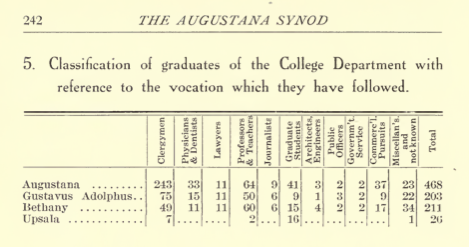
https://archive.org/details/augustanasynodbr00augu Swedish Lutheran pioneer missionaries / [C.J. Petri] -- A brief history of the Augustana Synod / [C.J. Sodgren] -- Church polity of the Augustana Synod / [Martin J. Englund] -- The missionary enterprises of the Augustana Synod / [Peter Peterson] -- The educational institutions of the Augustana Synod / [I.M. Anderson] -- The charitable institutions of the Augustana Synod / [M. Wahlstrom] -- The publishing interests of the Augustana Synod / [F.A. Johnsson] -- The language question / [Julius Lincoln] -- The union of the Augustatna Synod with the General Council / [C.A. Blomgren] -- The significance of the Augustana Synod to the Swedish Lutherans in America / [G.A. Brandelle] -- Statistics of the educational institutions

I.M. Anderson, “Educational …”

That musical organizations have flourished at Swedish institutions goes without saying. A separate chapter in the history of our educa- tional institutions should be devoted to the invaluable services of Dr. 0. Olsson, who, inspired by the rendering of Handel's oratorio, "The Messiah", to which he listened in London in 1879, conceived the idea of introducing our college youth to this glorious form of music. Upon returning to Eock Island he carried out this idea in the best and most practical manner by causing college students actually to render "The Messiah". The effects of this movement have been benef-

98 THE AUGUSTAN A SYNOD

icent and far-reaching beyond all expectations. Not only at Augus- tana College has the interest in oratorio music thus engendered con- tinued to manifest itself by annual concerts, but it has been taken up by other institutions of our Synod, notably at Bethany College, where the rendering of oratorio music has attained to a surpassing degree of perfection.

If, then, the Augustana Synod really has characteristics which are deemed of such great value that it would be an inestimable loss should they perish from the earth, then, we repeat, it pays to maintain those institutions which are the most effective instruments for perpetuating these characteristics, whatever be the cost. And we believe that the Augustana Synod has such characteristics. We believe that the repre- sentatives from every civilized, Christian country who have come to make America their home are each in possession of some distinctive excellence either not possessed at all by immigrants from other lands or in not so marked a degree. The best of each should therefore be scrupulously guarded as a sacred treasure, should be protected from extinction when the other elements of foreign nationality are lost, and should be contributed to the common fund of American culture, re- ligion, and citizenship, so that the civilization about to be evolved in America may become, under the providence of God, in its complexity and cosmopolitan character better than anything heretofore produced in history.

The people of the Augustana Synod owe it as a debt to their

102 THE AUGUSTANA SYNOD

children to hand over to them the good which they have themselves brought from overseas or have inherited from their Swedish- American fathers; they owe it to the Synod, under the influence of which rich spiritual blessings have come to themselves, to perpetuate that Synod; and they owe it to the American nation, as above indi- cated, under whose beneficent government and liberal institutions they have enjo} r ed and still enjoy inestimable privileges, to contribute to the character of American civilization all that which is best in Swedish Lutheran faith and church practice, which we firmly believe is represented by the Augustana Synod and its institutions of learning.

103

The oldest of the educational institutions of the Augustana Synod was founded, as above set forth, in 1860 under the name of Augustana Seminary and was first located in Chicago, Illinois. Prof. Lars Paul Esbjorn was made the first president. Twenty-one students were in attendance during its first year. It is interesting to note that from the very outset, though there was but one regular professor, instruc- tion was given in all the following subjects : Sacred History, Hebrew, Greek New Testament, Pastoral Theology, Homiletics, Symbolics, Church History, Dogmatics, English Grammar, Swedish Grammar, Norwegian Grammar, German, Logic, Latin, Khetoric, Arithmetic, Geometry, Algebra, Trigonometry, History, and Geography. Five candidates for the ministry, who had completed a satisfactory theo- logical course at the seminary during its first year, were ordained in 1861.

Lincoln, “Language Question”

The Census of 1900 reports the presence in the United States of 574,625 persons whose native country is Sweden; 86,304 born in the United States of one Swedish parent, the other native; 998,538 born in the United States of Swedish born parents; in all 1,659,467 in- habitants of Swedish ancestry. The religious census of the Swedes in the United States is as follows:

Augustana Synod 163,473

Swedish Covenant, including Congregationalists and Free Church 46,000

Methodists .'. 20,500

Baptists 27,000

Other Swedish denominations (estimated) 6,000

Swedish members of English speaking churches outside of

Synod (estimated) 10,000

Sunday-school children (estimated) 150,000

Children under S'unday-school age (estimated) 35,000

Total 457,973

These figures can be only approximately correct, but will serve for illustration. Accepting- the estimate of 457,973 as the number of Swedes and their descendants in the United States who are affiliated with any church, and subtracting that sum from 1,659,467, the

THE LANGUAGE QUESTION 207

number found by census enumerators in this country, we find that 1,201,494 Swedes are not taken up in any religious statistics, an astounding figure.

The process of creating a new nation in this country is steadily going on. It has a distinctive name, American. In characteristics it is unlike any other on earth. It consists not of any one people, but of many, gradually being made into one. The official language is English. That is the language of the Declaration of Independence and the Constitution which governs us. How English came to be the language of the land, is familiar to every school-boy. It was done through the right of possession. The commands to the Continental army were in English. The coming to our shores of different peoples after the revolution did not alter the situation. Consciously or un- consciously they were made Americans in heart and utterance. What- ever their mother tongue, they understood that the privileges of American citizenship were enhanced by a knowledge of the official language.

The American citizen is a new creation in the history of the world. He has no counterpart. From 1789 to 1908, 27,000,000 foreigners set- tled in America. One glance at them will tell us that they are made over. The American is a composite character. Here the nations of the world are thrown together to give and to take. The result is a combination of the best of what comes here and what is already here, blended under favorable conditions and matured in our atmosphere of freedom. You know how the model of a perfectly formed body is obtained. One man has the correct poise of the head; another, grace- ful body-lines; another, a well developed arm; another, a fine pair of shoulders ; and so the search is carried on, until by measurements and observations a form can be made, and in it is cast the figure of the

THE LANGUAGE QUESTION 209

ideal physical man. The ideal American will be a combination of the good traits of the best people who settle here. Eventually we shall lose our former identity, but we shall find a new one. After a two years' residence in the United States, the Swedish emigrant cannot return to his native land without betraying some American char- acteristic.

We are also drifting towards a common language. The Swedish, German, Dutch, French, Hebrew, Eussian, etc., channels converge into English. As well try to hold roaring Niagara back with the palm of one's hand, as to prevent this change. One solitary argument is sufficient to substantiate this statement our compulsory education law. In New York State all children under 14 16 years of age must attend school 160 days each year, and there every branch is taught in English and, on top of them all, that language itself.

This phase of our national life presents a problem to the foreign people who have become citizens of the republic and are keeping up their own language. It concerns the Augustana Synod. The fact that the editor of this publication has invited a discussion of the question indicates that we see something coming. It is the problem of to-day to some extent, of a near-at-hand to-morrow to a greater extent. How soon we shall see that to-morrow we cannot say def- initely,, but the infallible signs of its approach are plain. Will the Synod read them ? Let us point out a few : In 1907 the immigra- tion from Sweden was 20,589, in 1908 only 12,809, an immense falling off from former years. A supreme effort is being made to discourage emigration, and it will be more or less successful. The Swedish language is now an optional study in our colleges, where it formerly was obligatory. A demand has been found for a Church paper, published in the English language, The Young Lutheran's Companion. The organization of English Lutheran churches upon Swedish fields. The need of instruction in the English language in our Swedish Sunday-schools. The gradual disappearance of the Swedish summer schools. The occasional English service in Swe- dish churches. The use of the English ritual at baptisms, marriages, and funerals. The difficulty to secure Sunday-school teachers in the cities, who know Swedish well enough to instruct children. The preference of English by our young people as a conversational medium. The prevalence of anglicisms in the sermons of a majority

210 THE AUGUST AN A SYNOD

of our younger pastors. The numerous applications by catechumens for instruction in English. The increasing number of intermar- riages. The apparent difficulty of the younger laymen to express themselves in Swedish at congregational business meetings, and the ease with which they do this in English. Such conditions are actually found in our Synod, in some localities more pronounced than in others. Even though some peculiar circumstances may have been for- gotten in the above recital, we feel that in the main the picture is true. That there are congregations, to which the description does not apply, only proves that the process is slower there than elsewhere. Time will make the change. Such is the situation after fifty years. Has there been an over-zealous anxiety for Swedish and tardiness in taking up English work, and have we lost thereby? We do know of a few instances of impatience with us for the slowness of transition into English work which have resulted in a severance of membership in our Synod, but they are exceptions. In most of such cases there have been other considerations. The history of the Augustana English congregations is both interesting and instructive. They have grown steadily but slowly. In the nature of things this is to be expected. Our English work must not be compared with the Swedish in results for at least a few years to come. The demand for it will not be sudden, it is gradual. There cannot be a phenomenal growth, such as the Swedish churches enjoyed when immigration was at its height. There is perhaps no Swedish church in the Augustana Synod which to-day could adopt the use of English entirely without sustaining a loss of membership and without crippling itself. Yet there are very few congregations, if any, where some English work, in a true and sensible proportion, would not bear good fruit. One danger to be avoided is precipitation. Hesitation and stagnation are equally fatal. General legislation is impossible. It is the unequivocal duty of each pastor to keep a sharp lookout upon the field entrusted to his care. He must grasp the opportunity and strike out at the right moment. The Synod seems to be agreed that the proper solution is the organiza- tion of independent English-speaking congregations under the super- vision of the mother church. One thing is certain, it must be an Augustana Church. An effort by other bodies will not succeed among the Swedes. As a nation we have our own temperamental character- istics, religiously and socially. So have others. They have inherited

211

them; so have we. What we have is a part of us. We also want an unbroken line of memories. I am not alone in giving expression to the hope that when the transition takes place, it may be in language only, without one other sacrifice than the mother tongue, and God knows that will be hard enough. Our liturgy, familiar to every Swede, our music, our hymns can be adopted. Then old and young will experience a home-like feeling in entering a new Augustana church. This need not be a blow at unity nor a reactionary attempt against present relationship with other Lutheran bodies. A time may come later, when a new liturgy can be compiled, which shall include features from the ones now in use and where all of us may find a reminder of home. To many this may seem puerile reasoning, but there are thousands in our Synod, to whom the language question presents no other solution. Our Book Concern has printed an edition of the Swedish liturgy translated into English. A beginning has been made to give us the Swedish hymns in English. We have literature enough for the beginning. Let us use it. A discouraging feature of literary work in the Augustana Synod is the hypercritical spirit, which manifests itself, and centers its attack mainly upon efforts in English. Augustana English is not bad ; it is as good as any. People understand it and it obeys the rules of grammar. Why there should be such violent criticism by our Swedish-American people of their own kind, is almost inexplicable. Away with it! It has become a bad habit.

Monday, February 17, 2014

Robin Cohen, "Creolization and Cultural Globalization: The Soft Sounds of Fugitive Power" -- excerpt

Creolization and Cultural Globalization: The Soft Sounds of Fugitive Power

University of Warwick

Submitted to Special Issue of Globalizations Vol. 4 (2) 2007 (forthcoming May 2007) edited by Barrie Axford. Published by Routledge ISSN 1474-7731. http://www2.warwick.ac.uk/fac/soc/sociology/rsw/current/cscs/working_papers/creolization_and_cultural_globalization_--_the_sof.pdf

While it is true to assert that creolization had its locus classics in the context of colonial settlement, imported black labour and often a plantation and island setting, by indicating that there are other pathways for creolization I want to signify the potentially universal applicability of the term. To be a Creole is no longer a mimetic, derivative stance. Rather it describes a position interposed between two or more cultures, selectively 19 appropriating some elements, rejecting others, and creating new possibilities that transgress and supersede parent cultures, which themselves are increasingly recognised as fluid. If this is indeed happening we need to recast much traditional social theory concerning race and ethnic relations, multiculturalism, nation-state formation and the like – for we can no longer assume the stability and continuing force of the ethnic segments that supposedly make up nation-states. Likewise, we cannot assume that the nation in international relations has a continuously uniform character. Accepting the force of hybridity and creolization is also to accept that humankind is refashioning the basic building blocks of organised cultures and societies in a fundamental and wide-ranging way.

* * *

he creolization of the world in the sense described by Hannerz and other writers cited earlier has provided a space for many people to create a new sense of home, a locus to express their uniqueness in the face of cultural fundamentalisms and imperialism. Behind the strident assertions of nationalism, ‘old ethnicities’ and religious certainties is an increasing volume of cultural interactions, interconnections and interdependencies and a challenge to the solidity of ethnic and racial categories. These are the soft sounds of fugitive power, but you may need to have your ear cocked to the ground, or your finger on the pulse, if you are to fully hear them and discern their influence.

"Fugitive power" defined in Note 1: "1. The notion of ‘fugitive power’ is used by Katherine Farrell (2004) to describe modes of democratic power operating beyond the reach of the law. In developing the concept, she (personal correspondence) acknowledges a Foucaultian analysis on constitutional reform written by her colleague, John Morison. Foucault’s views need more detailed exposition, but in one germane passage he suggests that power is ‘produced from one moment to the next, at every point, or rather from one point to another. Power is everywhere; not because it embraces everything, but because it came from everywhere’ (Foucault 1978: 923)."

Monday, February 10, 2014

"Swedish Diaspora": Travel story in Chicago Tribune

Excerpts from 1996 travel section article about Lindstrom, Minn.

June Sawyers. "Swedish Diaspora: Karl Oskar And Kristina's Minnesota Town Celebrates The Emigrant Experience." Chicago Tribune May 12, 1996 http://articles.chicagotribune.com/1996-05-12/travel/9605120214_1_swedish-emigrant-emigrants-vilhelm-moberg.

They look vulnerable yet strong, hesitant yet hopeful. The statue of the Swedish emigrants Karl Oskar and Kristina Nilsson at the foot of Lindstrom's main street represents the dual sides of the emigrant's dilemma. Karl Oskar faces forward, looking west to America, while wife Kristina looks east over her shoulder, back toward Sweden.

Karl Oskar and Kristina are the creations of the Swedish writer Vilhelm Moberg, author of the Swedish emigrant sagas "The Emigrants," "Unto a Good Land," "The Settlers" and "Last Letter Home." In the 1970s two of the books became the basis for the acclaimed motion pictures "The Emigrants" and "The New Land" starring Max Von Sydow and Liv Ullmann. It is their inspiring and sometimes tragic tale that has come to symbolize the Swedish emigrant experience. Karl Oskar and Kristina--the Swedish everyman and everywoman--represent the millions of faceless men and women who left Sweden to start over again in a strange land.

The Swedish presence is still strongly felt--and seen--in Lindstrom, a charming town near the Minnesota-Wisconsin border that was named for an early Swedish pioneer, Daniel Lindstrom. The awning of the city hall appears in the Swedish blue and yellow and even the fire hydrants are painted in the Swedish colors. The water tower is in the shape of a Swedish coffee pot. There's a Scandinavian doughnut shop, and the sign outside the Swedish Inn announces: "HAR SERVERAR VI RIKTIGT SVENSKT KAFFE!" ("We serve authentic Swedish coffee!") And, if you look in the right places, you just might see, as I did, another sign, impishly warning, "Caution Swedish Crossing."

Sally Barott, chair of the 1996 Chisago Lakes Area Swedish Immigration Jubilee Committee, estimates that the population of Lindstrom is half Swedish. Norwegians, Italians, Finns and Irish are also represented.

* * *

Spend any length of time in this part of the Midwest and you will detect a subtle yet distinctive Scandinavian lilt in the speech of the people, especially away from the urban centers (though not as pronounced perhaps as in the Coen Brothers' movie "Fargo," but certainly evident).

The Chisago Lakes area comprises Chisago City, Lindstrom and Center City. The first Swedes came to this part of east-central Minnesota in the early 1850s. The landscape of lakes, forests and valleys probably reminded many emigrants of their homeland. Swedish historian Lars Lungsmark has called Chisago County "perhaps the most Swedish colony in the United States and one dotted with the names of Swedish pioneers."

Vilhelm Moberg was a Swedish journalist and author with an interest in the scores of emigrants who left Sweden to settle in the new land across the ocean. In 1948 he came to the Chisago Lakes area to do research. He interviewed a number of old Swedes and Swedish-American families, lodging in Chisago City and biking back and forth to Lindstrom.

From the stories and information he collected, Moberg created the seminal characters of Karl Oskar and Kristina Nilsson from Smaland, Sweden.

* * *

Many of the pioneers that Moberg based his stories on are buried in the Chisago Lake cemetery in nearby Center City, their gravestone inscriptions carved in Swedish. The cemetery is located on the property of the Chisago Lakes Lutheran Church, itself a prominent landmark and the oldest Lutheran church in the area. It was the church the fictitious Karl Oskar helped to build.

But the most prominent landmark associated with Moberg is, of course, the Emigrants Statue.

The statue, a replica of the original in Karlshamn, Sweden, is the vision of Willard ("Smitty") Smith, a Lindstrom businessman, who in 1969 commissioned sculptor Roger David to design a copy of the statue of Karl Oskar and Kristina.

When Smith died in May 1975, he was buried as requested in the old Swedish Glader Cemetery on Glader Boulevard in Lindstrom--the same spot that author Moberg selected as the final resting place for Karl Oskar. Smith's plot was the first interment in the old cemetery since 1918.

The Karl Oskar and Kristina statue has become a pilgrimage site of sorts for many visiting Swedish and Swedish-American visitors. Every August (this year Aug. 16-18), Lindstrom celebrates Karl Oskar Days.

Thursday, February 06, 2014

Library of Congress "Swedish Song" website w/ links to 78rpm recordings of Olle i Skratthult

D R A F T

"Swedish Song," The Library of Congress Celebrates the Songs of America. Performing Arts Encyclopedia. Library of Congress. http://www.loc.gov/item/ihas.200197475.

xxx

... The largest wave of Swedish emigration to the United States was during the late nineteenth and early twentieth centuries. Swedish communities were established in many parts of the United States, but especially in New England, the upper Midwest, and the Northwest.

Swedish song in the United States has often had an appeal far beyond the Swedish community. Jenny Lind, an internationally famous Swedish operatic soprano, became wildly popular in the United States through a concert tour sponsored by P. T. Barnum between 1850 and 1852, famously giving her earnings to charity. She included Swedish songs in her performances along with selections from German and Italian operas. Sheet music was published based on her songs and many places and products were named for her.

In the late nineteenth century Scandinavian and Swedish festivals, often held at midsummer, became popular in the parts of the country where there were Swedish communities and these were venues where songs, music, and dances would be performed. Swedish immigrants formed many choral societies. These groups gave performances in the Swedish community, at Scandinavian festivals, and for general audiences. Swedish American choral groups often performed a combination of art songs, popular songs, religious songs, and traditional songs. The December twelfth festival of Saint Lucia, as celebrated by Swedish Lutherans, often includes choral singing, especially the most famous song associated with the holiday, "Santa Lucia."

  • Hjalmar Peterson, who immigrated to the United States from Sweden in 1906, created a character very similar to Lars Bondeson, named Olle i Skratthult (Olle from Laughtersville), and performed for enthusiastic Swedish American audiences. His performances included skits, monologues, and songs – a Swedish language version of American vaudeville entertainment. In this example he sings "Storbönnernas vals" (a well-to-do farmer's waltz). "Finska valsen" ("Finnish Waltz"), composed by Hesekiel Wahlrot with lyrics by the popular Swedish performer Ernst Rolf tells of a boy at a rural dance, and was another favorite on the American Swedish stage as performed by the character Olle i Skratthult. The character of Olle i Skratthult was immensely popular, allowing Peterson to form his own company and tour the United States in 1916.
  • Charles G. Widdén was another comic actor and singer popular among Swedish American audiences in the early twentieth century who made use of rustic comedy inspired by Lars Bondeson. He created his own rustic character, Olle ve kvarna (Olle of the Mill). In this example from his comic repertoire, he sings a traditional song, "Nikolina," in which a young man's hopes of marrying his girl are dashed when he asks her father for his hand and is beaten off, with the violence described in comic terms. In the end the couple resolves to marry after her father is dead (this was also one of the favorite songs performed by Olle i Skratthult). In addition to comic songs, Widdén sang popular songs of the early twentieth century, such as "Kostervalsen," a waltz by the Swedish song writing team of Göran Svenning and David Hellström.

xxx

After World War I the United States put severe limits on immigration, greatly reducing the number of new Swedish immigrants. Swedish Americans, always a highly literate and ambitious group, strove to assimilate. By the mid-twentieth century the vast majority of Swedish Americans spoke only English. Professional variety entertainment by and for Swedish speakers had largely disappeared by the1950s. Festivals and choral music also declined. But in the 1960s and 1970s there was a revival due to a strong desire of a new generation to return to their roots. Swedish and Scandinavian festivals are now held in many states. This has once again created venues for choirs and performers singing songs in Swedish. The member groups American Union of Swedish Singers report that they now sing about half their songs in English and half in Swedish, appealing to the audiences of mixed English and Swedish speakers they now encounter.

Monday, February 03, 2014

James Agee on "Swing Low Sweet Chariot"

Excerpt from James Agee, A Death in the Family (1955)

http://ajaytao2010.files.wordpress.com/2012/11/a-death-in-the-family-james-agee.pdf

Italicized fragment inserted at the end of Part 1 of the novel, between chapters 7 and 8

… His father loved to sing this song too and sometimes in the dark, on the porch, or lying out all together on a quilt in the back yard, they would sing it together. They would not be talking, just listening to the little sounds, and looking up at the stars, and feeling ever so quiet and happy and sad at the same time, and all of a sudden in a very quiet voice his father sang out, almost as if he were singing to himself, “Swing low,” and by the time he got to “cherryut” his mother was singing too, just as softly, and then their voices went up higher, singing “comin for to carry me home,” and looking up between their heads from where he lay he looked right into the stars, so near and friendly, with a great drift of dust like flour across the tip of the sky. His father sang it differently from his mother. When she sang the second “Swing” she just sang “swing low,” on two notes, in a simple, clear voice, but he sang “swing” on two notes, sliding from the note above to the one she sang, and blurring his voice and making it more forceful on the first note, and springing it, dark and blurry, off the “l” in “low,” with a rhythm that made his son’s body stir. And when he came to “Tell all my friends I’m comin too,” he started four full notes above her, and slowed up a little, and sort of dreamed his way down among several extra notes she didn’t sing, and some of these notes were a kind of blur, like hitting a black note and the next white one at the same time on Grandma’s piano, and he didn’t sing “I’m comin’ ” but “I’m uh-comin,” and there too, and all through his singing, there was that excitement of rhythm that often made him close his eyes and move his head in contentment. But his mother sang the same thing clear and true in a sweet, calm voice, fewer and simpler notes. Sometimes she would try to sing it his way and he would try to sing it hers, but they always went back pretty soon to their own way, though he always felt they each liked the other’s way very much. He liked both ways very much and best of all when they sang together and he was there with them, touching them on both sides, and even better, from when they sang “I look over Jordan what do I see,” for then it was so good to look up into the stars, and then they sang “A band of angels comin after me” and it seemed as if all the stars came at him like a great shining brass band so far away you weren’t quite sure you could even hear the music but so near he could almost see their faces and they all but leaned down deep enough to pick him up in their arms. Come for to care [sic.] me home.

They sang it a little slower towards the end as if they hated to come to the finish of it and then they didn’t talk at all, and after a minute their hands took each other across their child, and things were even quieter, so that all the little noises of the city night raised up again in the quietness, locusts, crickets, footsteps, hoofs, faint voices, the shufflings of a switch engine, and after awhile, while they all looked into the sky, his father, in a strange and distant, sighing voice, said “Well ...” and after a little his mother answered, with a quiet and strange happy sadness, “Yes ...” and they waited a good little bit longer, not saying anything, and then his father took him up into his arms and his mother rolled up the quilt and they went in and he was put to bed.


Bascom Lamar Lunsford, liner notes to Bascom Lamar Lunsford: Ballads, Banjo Tunes, and Sacred Songs of Western North Carolina. Smithsonian/Folkways SF CD 40082. Washington: Smithsonian Institution, 1996.

6. Swing Low

"The title of this old spiritual is 'Swing Low.' I think it possibly is the foundation of the beautiful spiritual, 'Swing Low, Sweet Chariot.' I learned this from a student of mine way back in years gone by. Then I took Dr. R.W. Gordon to his home in 1925 at York, South Carolina, and Dr. Gordon recorded it on a cylinder record. A beautiful song sung by Willard Randall, then a man of the family, about middle age, at York, South Carolina." (14 -- lyrics on 15)

Sunday, February 02, 2014

Robin Clark of Bird Rock Dulcimers demonstrates Ed Thomas replica dulcimer, advanced noter techniques

D R A F T

http://www.dulcimers.co.uk http://www.dulcimers.co.uk

Ed Thomas Replica Mountain Dulcimer - 30 Mar 12.wmv. Published on Mar 30, 2012. A short video of my new Ed Thomas (1850-1933) replica dulcimer made by John Knopf of Westmoreland, Michigan. This is an exact replica of a poplar wood Ed Thomas and here I compare it to a contemporary mountain dulcimer. John Knopf has done a wonderful job of making this rustic, traditional instrument the way that ED Thomas made his. The body is a lot smaller narrower that you see on contemporary dulcimers, and this has the effect of making the tone brighter. The instrument has a surprising amount of resonance and volume - I can feel it vibrating through the noter and on my legs as I play it.

https://www.youtube.com/watch?v=JK2OBzrZ8IU

Mountain Dulcimer advanced noter techniques.

Saturday, February 01, 2014

"Lee's Waltz" for dulcimer and guitar -- Prairieland Strings, Tuesday, Feb. 4 (if it doesn't snow again) ** UPDATE x1 ** -- but it's going to snow again, and we're calling off the session after all

UPDATE Monday, Feb. 3: Here's the blast email I sent out at 9:33 this morning:

Bet you saw this coming, didn't you?

Tuesday's forecast is now calling for a 100-percent chance of snow, and we're calling off tomorrow's "first Tuesday" session of the Prairieland Strings dulcimer club.

Good night to stay home, throw another log on the fire and play "Lee's Waltz" and -- dare I mention it? -- "Sumer Is Icumen In." Yeah. Ironic. Last time we try to introduce *that* song in the wintertime! Here's the central Illinois forecast from NOAA in Lincoln:

-- pe

* ACCUMULATIONS...6 TO 8 INCHES WILL BE POSSIBLE ALONG AND NORTH OF A TAYLORVILLE TO PARIS LINE. 4 TO 6 INCHES WILL BE POSSIBLE SOUTH OF THIS LINE TO INTERSTATE 70. LOCALIZED HIGHER AMOUNTS WILL ALSO BE POSSIBLE.

* WIND...NORTHEAST WINDS OF 10 TO 20 MPH WILL BECOME NORTHWEST AT 15 TO 25 MPH TUESDAY NIGHT.

* VISIBILITIES...SNOW AND BLOWING SNOW WILL REDUCE VISIBILITIES TO LESS THAN A QUARTER MILE AT TIMES TUESDAY NIGHT THROUGH WEDNESDAY MORNING...MAINLY ALONG AND NORTH OF A BEARDSTOWN TO DANVILLE LINE.

* IMPACTS...ACCUMULATING SNOW AND AREAS OF REDUCED VISIBILITIES DUE TO BLOWING SNOW...WILL CREATE HAZARDOUS DRIVING CONDITIONS TUESDAY AFTERNOON THROUGH WEDNESDAY MORNING.

And my original message over the weekend went like this:

So, here we are … Tuesday's forecast is calling for: "Cloudy with periods of snow during the afternoon. High 24F. Winds ENE at 10 to 20 mph. Chance of snow 80%. 3 to 5 inches of snow expected." And Tuesday night: "Snow in the evening will taper off to light snow overnight. Low 19F. Winds NNE at 10 to 20 mph. Chance of snow 80%. Snow accumulating 1 to 3 inches." But it's changed within the last hour. Here's what I take it to mean: Anything can happen.

Or not.

It's a crapshoot.

So I'm going to send out music and hope for the best.

But watch this space. Your email inbox, too. If the forecast is still calling for a lot of snow and/or ice on the roads in a couple of days, we'll have to call off the session again.

Our regular "first Tuesday" session of the Prairieland Strings dulcimer club is from 7 to 9 p.m. at Atonement Lutheran Church, 2800 West Jefferson, Springfield. To the email message I'm attaching mountain dulcimer tablature for "Sumer Is Icumen In" from when we got snowed out last month (ironic enough for you?) and a lead sheet for "Lee's Waltz," a lovely mountain dulcimer tune that sounds even lovelier when other instruments are on it too.

Here it is played by YouTube user Ken Rigby. If you're interested in dulcimer chords, watch his left hand. If you're not, you can just play the melody. On the dulcimer or the instrument of your choice!

The North Georgia Foothills Dulcimer Association has tablature for "Lee's Waltz" at

http://www.ngfda.org/tablature%20pdf/Lee's%20Waltz.pdf
Mike Thomas, who used to be with our Prairieland group and now winters in Florida, sent me the lead sheet, which has the notes and the guitar chords for the mixed groups of amateur musicians he now plays with.

"Learning to play with others, not only with different instruments but different kinds of music, I think has helped us musically," he said. "We introduced Doug Felt's 'Lee's Waltz' to them here on our RV park, and now it's one of their favorites. Some of the guitar players were challenged with the ABAC form of the song, so I used my EasyABC program to produce a version for them that allowed them to play out straight through without having to go back and forth between parts all one one page. I'll send it to you in case you have a guitar player who'd like to play the song …"

Doug Felt wrote the song for his wife Lee. They're fixtures on the dulcimer festival circuit. If you've noticed the low-slung cloth music stands that a lot of the mountain dulcimer players use, they're Doug's. And the cloth bags are Lee's design. You can see pictures of the stands and bags, along with other accessories at ...

http://dulcimerbaglady.com

Lee, who has a quiet sense of humor and makes the dulcimer bags, is the "dulcimer bag lady."

A North Georgia Foothills Footnote. NGFDA, by the way, has a lot of good information on its website, including a pretty good primer on ABC files, which it defines as "text files that describe in an fairly readable way the notes of a song, the duration of each note, and even the chords that accompany the melody." It uses the letters for note values, so "Amazing Grace" (in G) looks like this:

|:D | A> (B A/G/) B2 A | G2 E D2 D |
G> B A/G/ B2 A/B/ | ( d3 d2) B |
d> B A/G/ B2 A | G2 E D2 D |
G> B A/G/ B2 A | (G3 G2) :|
The advantage? Once you've entered an ABC file in a computer, the computer can do the kinds of things a computer can do -- including things like transposing a song into "D for dulcimer!" -- and print out the song in standard musical notation. Most of the common folk songs and hymns, especially from Great Britain and Ireland, are likely to be available on line in ABC format. Just do a Google search on the title and "ABC."

Tuesday, January 28, 2014

"Gray Cat on a Tennessee Farm" / "Happy Land" / "Waterbound" / tab and video clips for Clayville jam session Saturday, Feb. 1 ** UPDATE x1 ** CANCELED DUE TO WEATHER

UPDATE Thursday, Jan. 30, 5 p.m.: This one looks like it could be a bad one. NOAA-Lincoln is now issuing the following winter storm watch for central Illinois:

THE NATIONAL WEATHER SERVICE IN LINCOLN HAS ISSUED A WINTER STORM WATCH...WHICH IS IN EFFECT FROM FRIDAY EVENING THROUGH SATURDAY AFTERNOON.

* TIMING...PERIODS OF LIGHT SNOW ARE EXPECTED DURING THE DAY FRIDAY. HOWEVER...THE MORE SIGNIFICANT SNOWS ARE EXPECTED TO OCCUR OVERNIGHT FRIDAY INTO SATURDAY.

* ACCUMULATIONS...5 TO 7 INCHES OF SNOW WILL BE POSSIBLE ROUGHLY NORTH OF A RUSHVILLE TO BLOOMINGTON LINE. JUST SOUTH OF THIS HEAVY SNOW BAND...A PERIOD OF FREEZING RAIN MAY ACCUMULATE UP TO A QUARTER OF AN INCH IN A FEW AREAS BY SATURDAY AFTERNOON.

< SNIP >

* IMPACTS...SNOW AND ICE COVERED ROADS WILL CREATE HAZARDOUS DRIVING CONDITIONS ACROSS THE AREA LATER FRIDAY EVENING THROUGH MOST OF SATURDAY.

It doesn't sound like anything we want to take a chance on. So I'm calling off our Clayville Pioneer Academy of Music jam session for Saturday.

But we have our Prairieland Strings dulcimer club sessions Tuesday, Feb. 4, and Thursday, Feb. 20 (weather permitting). Everyone from the Clayville sessions is also welcome at the Prairieland sessions. I'll keep an eye on the forecast (since they're calling for snow Tuesday as well) and get out a notice on next week's session over the weekend.

* * *

Blast email I sent out tonight to the Clayville Pioneer Academy of Music list, slightly edited for Web publication with YouTube clips added …

Hi everybody --

Our monthly Clayville Pioneer Academy of Music jam session is coming up this week, from 10 a.m. to noon Saturday, Feb. 1, in the barn at Clayville Historic Site. At last month's workshop we had a good turnout, especially considering the weather, and a great time going over some jam session basics and playing tunes like "Five Pounds of Possum (in My Headlights Tonight)." A big hat tip to Mike Anderson for stopping by! I was really impressed by how quickly everyone picked up the tunes, and how much fun we had playing together on different instruments. "Five Pounds" will be back by popular demand at Saturday's jam.

In fact, we'll be building on a couple of the things we did at the workshop. … Ip> I need to ask a favor! I can't find my list of names and email addresses from the workshop (this is really embarrassing), so please help spread the word about Saturday's session by word of mouth, especially to anyone who was there last month. Feel free to forward this email to anybody who might be interested, too. My contact information is in the signature below the three stars at the bottom of the message.

Speaking of Mike Anderson, there's still time to register for the discounted rate of $145 for his Winter Weekend mountain dulcimer workshop Feb. 21-23 in Chilichothe. Details at http://www.dulcimerguy.com.

Information on our tunes for Saturday below:

GRAY CAT ON A TENNESSEE FARM

The tune I want to highlight Saturday has gotten to be kind of a mountain dulcimer standard, but it's a classic old-time string band number called "Gray Cat on a Tennessee Farm" by Uncle Dave Macon of the Grand Ole Opry. … Dulcimer tablature, with the melody in standard notation and suggested guitar chords above the notes is available on the Dogwood Dulcimer Association of Pensacola, Fla., website at

http://rlwalker.gulfweb.net/dogwood/dogwood.html

To get to the tab for "Gray Cat," click on "Tab/Music Sheets" on the left, and when the TUNE BOOKS directory appears, click on the link that says "Click on Tunes -- alphabetic order." It's in the second column. The web address is …

http://www.gulfweb.net/rlwalker/dogwood/alltunes/Grey%20Cat%20On%20A%20Tennessee%20Farm%20(D).

… but it's a PDF file and you may want to go through the directory if it's balky downloading it. It's in the left-hand column of the TUNE BOOKS directory.

Some clips of "Gray Cat on a Tennessee Farm," as performed by:

Uncle Dave Macon. Uncle Dave was a former vaudeville and medicine show hoofer who joined the Opry in the 1920s and is widely considered its first star. His words to "Gray Cat," even though they're hardly ever performed anymore, are classic.

A dulcimer club. The Silver Strings Dulcimer Society of Garden City, Mich., gets it up to speed at their variety night:

A mountain dulcimer soloist. Randy Adams, who has adapted his own style and is taking the dulcimer in new directions. His only comment on the YouTube clip: "Uncle Dave!!" It's all he needs to say.

MORE DULCIMER TAB (w/ NOTES AND GUITAR CHORDS)

I decided to highlight "Gray Cat" this month when I was looking for the tab for "Five Pounds of Possum," which is also on the Dogwood Association website. There are a couple of other very cool jam tunes, too, "Waterbound" and an old camp meeting song called "Happy Land." You can find them in the same TUNE BOOKS directory as "Gray Cat" and "Five Pounds of Possum." I post clips of both to the blog, too.

THERE IS A HAPPY LAND

An old camp meeting tune from the 19th century, a favorite at all-day singings from The Sacred Harp and other shape-note tune books. Two versions below.

Sacred Harp singing at Liberty Church in Henagar, Ala. If you haven't heard it before, this is traditional four-part a cappella choral singing. The nonsense syllables you hear at the beginning -- fa sol, la fa sol sol and so on -- represent different notes of the scale and help singers remember the tune. The little girl beating time in the middle of the square is leading the song.

Athens, Ala., Dulcimer Jam Group. From their series of videos -- Mountain Dulcimer Lesson Series. "These videos are intended to get you used to playing along with a group," they explain.

"Athens," by the way, ain't pronounced too good down there. They say it like some town in Greece, or Georgia, or somewhere like that.

WATERBOUND

A fine old southern Appalachian string band tune, performed below by a band called String Theory from Athens, Ga., on WUGA-FM radio and TV. (See note on pronunciation of "Athens," above.) Tab is also available in the Dogwood Dulcimer Association directory (left-hand column, down at the bottom). The B part is a little different from the version we'll play. Everywhere I've been, it's played differently. But the A part, the part with the lyrics, is always the same. A fun tune.

Pete Seeger, May 3, 1919-Jan. 27, 2014

Iconic folk musician Pete Seeger, who kept performing as recently as last year's Farm Aid concert, died Monday at the age of 94. Today's New York Times deftly summed up his career: "For Mr. Seeger, folk music and a sense of community were inseparable, and where he saw a community, he saw the possibility of political action." The music and the sense of community and the promise of political action were inseparable. Adds the Times:

In his hearty tenor, Mr. Seeger, a beanpole of a man who most often played 12-string guitar or five-string banjo, sang topical songs and children’s songs, humorous tunes and earnest anthems, always encouraging listeners to join in. His agenda paralleled the concerns of the American left: He sang for the labor movement in the 1940s and 1950s, for civil rights marches and anti-Vietnam War rallies in the 1960s, and for environmental and antiwar causes in the 1970s and beyond. “We Shall Overcome,” which Mr. Seeger adapted from old spirituals, became a civil rights anthem.

As much as the banjo, Seeger's instrument was the audience.

Honing a skill he learned at labor rallies during the 1940s, he was a virtuoso of sing-alongs. He was still at it at the age of 90, as shown here with Bruce Springsteen during President Obama's 2009 inauguration at the Lincoln Memorial:

From the New York Times obit:

Mr. Seeger was a mentor to younger folk and topical singers in the ‘50s and ‘60s, among them Bob Dylan, Don McLean and Bernice Johnson Reagon, who founded Sweet Honey in the Rock. Decades later, Bruce Springsteen drew the songs on his 2006 album, “We Shall Overcome: The Seeger Sessions,” from Mr. Seeger’s repertoire of traditional music about a turbulent American experience, and in 2009 he performed Woody Guthrie’s “This Land Is Your Land” with Mr. Seeger at the Obama inaugural. At a Madison Square Garden concert celebrating Mr. Seeger’s 90th birthday, Mr. Springsteen introduced him as “a living archive of America’s music and conscience, a testament of the power of song and culture to nudge history along.”

And this:

During the McCarthy era Mr. Seeger’s political affiliations, including membership in the Communist Party in the 1940s, led to his being blacklisted and later indicted for contempt of Congress. The pressure broke up the Weavers, and Mr. Seeger disappeared from commercial television until the late 1960s. But he never stopped recording, performing and listening to songs from ordinary people. Through the decades, his songs have become part of America’s folklore.

“My job,” he said in 2009, “is to show folks there’s a lot of good music in this world, and if used right it may help to save the planet.”

Even as he aged and many of his causes lost ground, Seeger never gave up hope. The obit concludes:

Mr. Seeger kept performing into the 21st century, despite a flagging voice; audiences happily sang along more loudly. He celebrated his 90th birthday, on May 3, 2009, at a Madison Square Garden concert — a benefit for Hudson River Sloop Clearwater — with Mr. Springsteen, Dave Matthews, John Mellencamp, Joan Baez, Ani DiFranco, Roger McGuinn of the Byrds, Emmylou Harris and dozens of other musicians paying tribute. That August he was back in Newport for the 50th anniversary of the Newport Folk Festival.

Mr. Seeger’s wife, Toshi, died in 2013, days before the couple’s 70th anniversary. Survivors include his son, Daniel; his daughters, Mika and Tinya; two half-sisters, Peggy, also a folk singer, and Barbara; eight grandchildren, including Mr. Jackson and the musician Tao Rodriguez-Seeger, who performed with him at the Obama inaugural; and four great-grandchildren. His half-brother Mike Seeger, a folklorist and performer who founded the New Lost City Ramblers, died in 2009.

Through the years, Mr. Seeger remained determinedly optimistic. “The key to the future of the world,” he said in 1994, “is finding the optimistic stories and letting them be known.”

Monday, January 27, 2014

Last service at Zion Norwegian Evangelical Lutheran Church, Bay Ridge, Brooklyn, N.Y., 1908-2014

Zion Lutheran Church (ELCA), 6307 - 4th Ave., in Brooklyn's Bay Ridge neighborhood, held its last worship service yesterday, Jan. 26. At one time New York City was home to the second-largest Norwegian community in the world, between Oslo and Bergen. Most of them lived in Brooklyn, and many lived in Bay Ridge, located near the Gowanus Canal and almost literally in the shadow of today's Verrazano Bridge.

Zion Lutheran Church [Google street view from *NYC-AGO website]

Zion was founded in 1908 as one of several Norwegian neighborhood parishes in Brooklyn. But as Norwegian-American families moved out of Bay Ridge, they were replaced by a multicultural inner-city neighborhood of Chinese, Italian and more recently a variety of Middle Eastern ethnicities. And, as happens with so many inner-city churches, Zion's congregation dwindled away over the years.

Founders of the church were my grandfather, Pastor Johan Ellertsen, and ___________. The picture at left below shows him in 1908, the year Zion was founded and three years after Norway became an independent nation [note flag in picture]. He remained at Zion until ____, when he left to take parishes in Minnesota and Massachusetts, and returned to Zion in the 1920s to officiate at the Norwegian-language services until his death in 1939.

Several of my cousins, Pastor Ellertsen's grandchildren, accompanied by several of their children and grandchildren, were able to attend the service and to sing a chorale, "Now Rest Beneath Night's Shadow" [Nun ruhen alle Wälder] with words by Paul Gerhardt to a melody by Heinrich Isaac.


Click here to hear it sung as a congregational hymn in German by the Große Kreuzgemeinde [Greater church of the Holy Cross] choir of Hermannsburg in Lower Saxony; here as arranged by Bach and performed by the St.-Johannis-Kantorei choir in the Baltic coast city of Rostock; and here for background posted earlier to this blog about the secular song "Innsbruck, ich muß dich lassen" on which the chorale melody is based.


My cousins have given me permission to post their pictures and descriptions of the event in this space, including one of Pastor Ellertsen's descendants who were able to gather for the occasion, including grandchildren, great-grandchildren and great-grandchildren, at left below, and one of his grandchildren, at right below. Four other grandchildren in Minnesota, Illinois and Norway were unable to attend.

"Yesterday was such a moving experience at Zion," my cousin Christine said in an email. "As John mentioned yesterday, our grandparents were there at the inception of the church and their family was there at its closing – like bookends. We have been given a rich legacy!"

I think the pictures hint at that legacy. I think they also show more Norwegian sweaters than I'm accustomed to seeing at the same time in the same place!

From an email my cousin Anne sent Monday (today) to family members:

We knew the church that John’s grandfather founded in Brooklyn was going to close, but the pastor gave us only a week’s notice that the final service was yesterday. John scrambled to let everyone know. Before the service folder was printed, John had corralled a choir of relatives to sing a chorale. We converged on Bay Ridge from NY, NJ, and PA in a snow squall. John found a stairwell where we could run through the music. Sounded good there!

Johan Ellertsen (John’s mother’s father) founded the church 105 years ago. I had him with me, tucked in my pocketbook – actually a picture from Cousin Peter on the tablet. Someone found a link with a living person, a woman whose parents were the second couple to be married by Rev. Ellertsen in the new church. All during the long service, I was very aware of this man none of us had ever met. Surely he would have been pleased with his living legacy. He had been a cantor in Bergen, a musical man with a beautiful voice. At the front of the church singing the anthem were three of his grandchildren with spouses, three great granddaughters, and several great greats. There were six great great grandchildren there, not all singing with our little family choir.

I’m not sure what brand of Lutheran this church ended up, but they had a ritual I’d never seen before. They put water in the baptismal font, blessed it, and had the bishop sprinkle the congregation with the water. Surely that’s as close to holy water as a Lutheran could get! It was meant to be a visual reminder of our baptism, and it wasn’t something that was done at regular services. At the end of the service there were prayers for various things such as the candles, communion set, formal record book of the congregation, etc. Everyone felt compassion for the 16 people who would be looking for a new church home, but the service was not maudlin.

We were invited to stay for the buffet meal afterwards. We tucked ourselves off to the side where we could observe the family reunion going on. This was a last gathering of many people who had belonged to that church through the years. Our kinship was merely historical. We noticed many Norwegian sweaters, showing the connection to Europe in a graphic way. …

I'm not sure it has much relevance here, but a letter follows that I wrote to Pastor Diane Wildow last week. Perhaps a researcher studying the history of immigrant congregations will Google into it in future years and find something in it of interest:

Yesterday I learned that Zion will be closing at the end of the month. I wish I could attend your final worship service since my paternal grandfather, Pastor Johan Ellertsen, was a co-founder of the church, but I am unable to do so on short notice. Please know, however, that you and the members of your congregation are in our prayers at this time of sadness and transition.

While I have rarely visited New York City and don’t remember ever attending services at Zion, I feel like it is part of my heritage and in some way I am a product of its ministry – even though two generations have passed by now and I am living a thousand miles away in Illinois.

My father, Birger W. Ellertsen, was baptized at Zion in 1913 and grew up in parishes of the old Norwegian Evangelical Lutheran Synod in the Midwest and in Brooklyn. But his career took him to rural Tennessee as a young man, and there he stayed for 50 years. Therefore when I was growing up, there were no Lutheran churches we could attend; however, we joined an Episcopal church with a similar liturgy, and I grew up listening to LPs of Bach organ preludes and Reformation chorales along with 10-inch vinyl recordings of the St. Olaf Choir.

More importantly, when I joined a Lutheran church rather late in life – as my mother moved to Illinois after my father’s death – I began to recognize that some of the more important attitudes and ethical standards I grew up with had their origin in Luther’s Small Catechism. In a sense, joining a Lutheran church was like a homecoming. (In more ways than one! Several members of our congregation in Springfield are Norwegian-Americans from Iowa and the Dakotas, and at times we sound like the news from Lake Wobegon.) In the meantime, I am reacquainting myself with the rich heritage of Lutheran hymnody.

When Dad died in 1997, he left me his copy of Bestefar’s [Norw.: grandfather's] 1913 Lutheran Hymnary. When I retired from college teaching, I wanted to find out more about it, and that led me by degrees to researching the musical heritage of Scandinavian immigrants in the Midwest. We had more Swedes than Norwegians in our part of the country (and I married a Swede from northern Illinois), so now I am learning about the old Swedish-American Augustana Synod and its contributions to the Evangelical Lutheran Church in America as well. I have begun to demonstrate a musical instrument called the psalmodikon that 19th-century pastors used to teach four-part harmony singing, and I am working up a proposal on Lutheran immigrant hymnody for a historical symposium here in the state capital. I think there is a story here that needs to be shared more widely.

I guess what I’m trying to say is that I’m convinced that Zion Lutheran Church has touched people’s lives in incalculable ways over the years, not only in the neighborhood you have served in Brooklyn but also very indirectly at times, as in my case. I am grateful that Zion is part of my heritage, and I am sure it will continue to enrich people’s lives in ways that none of us can even begin to imagine for many years to come.

Again, you and the congregation at Zion are in my thoughts and prayers.

According to the New York City chapter of the American Guild of Organists the organ at Zion was built in 1937 by Geo. Kilgen & Son of St. Louis. Located in the back of the sanctuary, it can be seen in the picture immediately above. Details in another picture, not included here, show a hymnboard for the 3rd Sunday after Epiphany displaying Nos. 250, 7[?]3. 668, 451, 474 44[7?] and 229.

[* I obtained the Google street view photo at the top of this post, along with details about the organ, from the American Guild of Organists' website at http://www.nycago.org/Organs/Bkln/html/ZionNorEvLuth.html.]

I Googled into this Yelp review while I was looking for photos of Zion: It was posted Nov. 14, 2013, by Yelp user Bree S.: "I have volunteered here on several Saturdays when they hold the Soup Kitchen to feed the homeless and hungry. Let me tell you, you will not find more compassionate people than here in this church. Gene, Mary, the pastor, and everyone else involved are incredibly kind and caring. Returning back to volunteer after quite a while, I felt completely welcomed and like I revisited my long lost family. The staff knows the names of the people who come to eat and always welcome them with a smile. They are incredibly generous. Before everyone eats, Gene holds a prayer and asks the people if they have anyone in particular they would like to pray for. Also, the kitchen always has extra food to hand out for the more needy. Lastly, I would like to say that volunteering here has definitely changed my perspective on life and how I care for other people. Volunteering at the Zion Luthern Church has made me a more benevolent and selfless person and I thank them for that."

Sunday, January 26, 2014

Mark Gilson -- Swedish tunes on mountain dulcimer

D R A F T

Mark Gilson plays American old-time, Irish, some northern European hummel music and Playford's English country dances -- especially Swedish dance tunes and marches. See his "Swedish Tunes on the Mountain Dulcimer," Mel Bay's Dulcimer Sessions Aug. 2006. http://archive.dulcimersessions.com/aug06/swedish.html

Hummels are zither-like instruments, usually with two or three fretted strings and several more strings which were parallel but unfretted and could be plucked for chords or strummed as drones. In Denmark, the instrument was called a humle. (One must remember that in the 1600's a substantial part of Denmark was under Swedish rule.) The word "hummel" derives from the German word 'hummelchen', a type of bagpipe named for a bumblebee, so one can picture the buzzing drone reminding one of the bee's hum. In Norway, the langeleik is a similar instrument but the frets are dramatically raised from the fret board. The earliest known langeleik dates from 1524. The bodies of most of these Scandinavian zither-family instruments are long and box-like, although there are some examples of more recent hummels with a heart-shaped body - just as contemporary dulcimers come in various different shapes. In addition, the Swedish "guitar" or cittra also shares the quality of having some of its strings fretted, with the majority of them unfretted. The cittra is still used in the music of Uppland which is also home to the nyckelharpa, a keyed fiddle which has much in common with hurdy-gurdies and makes extensive use of drones. These world repertoires of music which make such common use of drones always feel very natural on dulcimer.

And this, on modes:

I play most of my Swedish music in a GDD tuning, although I find ADD works better for certain tunes. The Swedish minor modes do not comfortably fit into Dorian or Aeolian scales, and other modal pieces often are played with neutral thirds on the fiddle. When they are reinterpreted by fixed pitch instruments, there is a tendency to switch between major and minor modes in such a way that makes them impractical on a diatonic dulcimer. Therefore, most of my Swedish and Norwegian repertoire is limited to the pieces in major (Ionian) or raised 4th (Lydian) tunings. The latter is more common in Norwegian tunes, but sometimes occurs in Swedish music from the border regions.

http://www.markgilston.com http://www.markgilston.com

14 CDs -- directory at http://www.markgilston.com/content/recordings.html http://www.markgilston.com/content/recordings.html

Dulcimer Hambo (2012). Purchase online from CD Baby!

Dulcimer Hambo is a beautiful collection of 27 lovely Swedish dance and processional tunes brilliantly realized on solo mountain dulcimer by virtuoso player, Mark Gilston.

The track list for Dulcimer Hambo includes: Dulcimer Hambo (My Hambo Has Fleas) 3:47 | Gånglåt från Rättvik 2:38 | Svingedans efter Mårten Sjöbäck 2:02 | Säckpipslåt från Norra Råda 2:37 | Polonäs från Sexdrega 2:56 | Gavels Ella (hambo) 2:52 | Gånglåt från Vigelsjö av Sten Blomström 2:45 | Polska efter Zuaw 2:30 | Norrbommens Polska efter Hjort Anders 2:08 | Slängpolska efter Byss-Calle 2:51 | Mora Långdans 1:24 | Mållongen av Gunnar Östergårds (hambo) 3:18 | Minne från Rommehed (polkett) 2:10 | Mungalåten 3:29 | Vals efter Tjäder Jonas 1:59 | Snurran (snoa) 2:46 | Steklåt från Särna 2:09 | Ten Crowns Polska 2:10 | Schottis från Haverö 1:57 | Polska efter Båtsman Däck 3:05 | Brudmarsch efter Florsen i Burs 2:03 | Polska från Åre 2:34 | Schottis från Idre 1:49 | Hambo på Logen 3:16 | Skålarna 3:56 | Vendelpolskan 2:20 | Långdans från Sollerön 2:04 | Total Running Time: 70:09

Also

Troll Road (2005). Purchase online from CD Baby!

This wonderful listening album features Swedish and Norwegian "spelsman" music played in traditional style on concertina and dulcimer with guest musician, Tom Gibney on fiddle.

The track list for Troll Road includes: Gänglät efter Olle Gustafson-Solne 1:46 | Slängpolska frän Enanger 3:27 | Brudsmarsh frän Leksands 1:52 | Polska efter Back Far 3:22 | Skänklåt från Dalarna 2:36 | Byggnaân (The Building) 4:06 | Barkbrödslater (Bark Bread tune) 3:15 | Troll Road (schottis) 2:38 | Skinnbracka med Lukku (hambo) 4:16 | Trollspolska (från Boda) 1:39 | Tom's Tune 1:58 | Schottis från Lindome 3:08 | Polska från Malung efter Sjunger Lars 1:53 | March from western Dalarna after Kalle Almlöf 1:52 | Schottis från Bingsjö 2:58 | Senpolska från Stöde 2:39 | Vandringen i Världen 3:21 | Springleik etter Ola åsen 2:45 | Polska från Föllinge (gammelvänster) 3:28 | Lekken Has Jo (springleik) 1:46 | Troll Ring (ringlander) 3:09 | Gammelvänster från Oviken 2:15 | Total Running Time: 61:19

Friday, January 24, 2014

Stig Wallin, Die Schwedische Hummel available on line (also an article on the nose flute -- Mike Anderson's fans take note)! ** UPDATED 1x ** w/ links to Mike's Winter Weekend in Chillicothe

Wallin's book is 123 pages long, with pictures, for those of us who have limited knowledge of German, beginning at p. 106 and transcriptions of Otto Malmberg's tunes at the very end. It's downloadable from a Wordpress blog called Ethnomusicology for all of our music at

http://allourmusic.wordpress.com/2013/03/05/wallin_hummel/

The website describes itself as: "Some good reading suggestions on the subject of ethnomusicology. Old and new. To those of you with similar material – share." (http://allourmusic.wordpress.com/about/). Journal articles and monographs, mostly in Russian (well, a Cyrillic language at any rate), with several in Swedish, German, Polish and English. One on "the Baltic Psaltry," which I take without reading it to be the kantelle and similar northern European folk zithers.

Multi-instrumentalist Mike Anderson's students and fans no doubt will be interested in Ernst Emsheimer and Cajsa Lund, Björnflockpipa och nässelpipa: Två traditionella folkliga blåsinstrument. It's not a word that has come up yet in the teach-yourself-Swedish book I'm working through this winter, but I'm pretty sure a nässelpipa would be a nose flute.

So, with apologies to Shakespeare, how's this for a bitterly cold January morning?

What's in a name? that which we call a nose
By any other name would smell as sweet.

Speaking of Mike Anderson, his Winter Weekend mountain dulcimer retreat is coming up next month ... Friday evening, Feb. 21; all day Saturday, Feb. 22; and Sunday morning, Feb. 23. It's $155 for intensive lessons with Mike and nationally regarded players Linda Brockinton (intermediate) and Maureen Sellers (novice) -- discounted to $145 if you register in the coming week, before Friday, Jan. 31 -- more information on Mike's website at

http://dulcimerguy.com/MA_MDW2010.htm

Chillicothe is on the Illinois River 15 or 20 miles north of Peoria (depending on whether you take Ill. 29 up from downtown Peoria or follow the bypass around on I-474 and Ill. 6 to Ill. 29 at Mossville). Some of us have stayed at the Super 8 motel on Ill. 29, and there are others in the area (to find motels, Google keywords "Chillicothe IL motels" and click on the map).

Thursday, January 23, 2014

Backgrounder on Augustana Synod in MetroLutheran -- how is a religious denomination like a '57 Chevy?

Pre-story on 2012 meeting of the Augustana Heritage Association at Gustavus Adolphus. Headline: "Augustana Synod to re-gather 50 years after LCA merger." MetroLutheran is a monthly publication in St. Paul-Minneapolis.

Quotes the Rev. Wayne Peterson, pastor at St. Barnabas Lutheran Church (ELCA), Plymouth, Minn. “If we know our past, we know more about who we are in the present. … Knowing our family roots is important for our self-identity.” It adds:

The Augustana Synod thrived for 102 years and in 1962 merged with three other Lutheran church bodies to form the LCA. Twenty-five years later, the LCA became part of the ELCA.

Augustana’s influence through merger was substantial, according to Peterson. “Augustana had an outsized portion of social ministry,” he told Metro Lutheran. “While it only had about seven percent [in attendance] of the newly-formed LCA, it brought something like 30 percent of the social ministries,” he continued.

Lutheran Social Service of Minnesota and Ecumen — a collection of nursing homes and senior living centers — have their roots in the Augustana Synod, Peterson explained.

“The Augustana Synod had both a theological conservativism and [a commitment to] social action,” said the Rev. Michael Edwins, a retired pastor from the Augustana tradition. “The pietism, which helped to found the Lutheran Bible Institute, was outgoing, so there was no hesitation in admitting the sinfulness of the world, but there was hope because people who were sinful weren’t seen as bad; they just needed to be cared for.”

Also some good atmospherics on why 2012 was the last biennial meeting of the AHA:
The 2012 gathering will be the last, according to Peterson. “I’m 57 now and was seven years old when Augustana went out of business,” he said. “Most folks [in attendance] will be in their 70s and 80s.”

Arland Hultgren, Luther Seminary retired professor with roots in the Augustana Synod, said that most people think of Augustana like a ‘57 Chevy. It went out of business at the boom time of the Christian Church in the U.S., with congregational growth, strong youth programs, and a dynamic missionary presence, and so they have very positive memories. But the synod didn’t have to go through the turbulent changes of the 1960s, with assassinations, movements for civil and women’s rights, and the like, that affect today’s church bodies.

Granquist concluded, “Augustana went into merger at a time when all church bodies had a sense of self. People were loyal in a different way than today. There was a communal pride that led to support of church colleges, seminaries, and social service agencies.”

Peterson wonders whether the church today can regain the kind of loyalty that Augustana engendered so that 50 years after its end, people still meet to ask questions about the future.

Mark Granquist, quoted above, is a church history professor at Luther Seminary.

Wednesday, January 15, 2014

Springsteen, Jimmy Fallon skewer "Gov. Christie Traffic Jam"

Bruce Springsteen made a guest appearance on Jimmy Fallon's late night TV show last night parodying New Jersey Gov. Chris Christie's bridge scandal to the tune of "Born to Run." Christie says he's the New Jersey singer's biggest fan, but it's more evidence Springsteen doesn't return the compliment. Here's the YouTube clip of Fallon, who has considerable talents as a mimic and parodist, and Springsteen:

Bruce Springsteen & Jimmy Fallon: "Gov. Christie Traffic Jam" ("Born To Run" Parody)

Details on NBC 10 Philadelphia, which covers most of southern Jersey:

Jimmy Fallon got some help from one of the most famous people to come from the Garden State for his latest bit mocking New Jersey Gov. Chris Christie's traffic jam scandal. Music legend Bruce Springsteen joined Fallon onstage to perform a new version of "Born to Run," featuring lyrics about getting stuck on the George Washington Bridge.

The two, who were both sporting The Boss' signature "Born in the U.S.A." look, used music to address revelations that Christie's aides orchestrated lane closings on the world's most heavily trafficked bridge, apparently as political payback to a local mayor. …

But the New York Daily News reported some in the studio audience in New York City may not have appreciated the humor:

By the end of their parody, Fallon and Springsteen had the audience laughing and cheering, but maybe not everybody shared the sentiment on the "Bridgegate" scandal — towards the end, it sounded like they may have garnered a few boos.
Read more: http://www.nydailynews.com/entertainment/tv-movies/bruce-springsteen-jimmy-fallon-sing-chris-christie-bridge-scandal-article-1.1580143#ixzz2qUCGipak.

Later (Monday, Jan. 20). “I let Chris Christie know we were doing it. And I said, ‘The silver lining is Bruce Springsteen says your name,’” Fallon said … “I haven’t heard back yet,” Fallon added. According to Politico, which picked up the quote from the Chicago Tribune, Christie "told Yahoo in an interview published Monday that he didn’t watch the parody, but that he wasn’t angry about it and got a direct message from Fallon on Twitter saying it was all in good fun."

Sunday, January 05, 2014

Fake it till you make it! (workshop Jan. 18 at Clayville)

Jam session tips for beginners —

If you have a dulcimer, or a guitar, banjo, fiddle or any other musical instrument you haven’t touched in years – or one you got for Christmas or picked up at a craft fair but haven’t learned to play yet – the Clayville Pioneer Academy of Music offers free workshops called “Fake It Till You Make It: Getting to Know Your Instrument and Playing in a Group” at Clayville Historic Site, on Illinois 125 at Pleasant Plains.

And we always have our "academy jams" from 10 a.m. to noon the first Saturday of every month. Most of us were beginners ourselves very recently, and we especially welcome beginners.

Each two-hour "Fake It Till You Make It!" workshop session will focus on basic jam session etiquette; how to learn a tune by hearing where the notes and chords are on a dulcimer; how to get the most out of online videos; and how to use the “three-chord trick” in order to play along with the group on songs you don’t know yet. While the workshop is designed especially for beginning mountain dulcimer players who want to learn how to play with other instruments, all instruments are welcome, and all skill levels are welcome. It's part of the Clayville Pioneer Academy of Music, and we're not about the fine points of technique as much as sharing our knowledge and making music with each other.

The first workshop will be from 10 a.m. to noon, Saturday, Jan. 18. Plans are to offer it again later in the year … updated schedules will be posted to the website at http://clayville.org/. Pete Ellertsen of Springfield, who facilitates the sessions, has studied mountain and hammered dulcimer at the John C. Campbell Folk School, Western Carolina University, Common Ground on the Hill, Mike Anderson’s workshops and Winter Weekend in Chillicothe. Loaner dulcimers are available.

Clayville Pioneer Academy of Music

10 a.m.-noon, Saturday, January 18, 2014

"Creolization and Creativity" -- Thomas Hylland Eriksen

Mélange, hotchpotch, a bit of this and a bit of that is how newness enters the world. It is the great possibility that mass migration gives the world, and I have tried to embrace it." Salman Rushdie, (qtd. Ericksen, "Creolization" 223).

Thomas Hylland Eriksen. "Creolization and Creativity." Global Networks 3 , 3 (2003) 223–237. Available on line at https://www.academia.edu/5091543/Creolization_and_creativity

[Publication Name: Global Networks -- a Journal of Transnational Affairs]

In the famous opening sequence of The satanic verses , where Saladin Chamcha and Gibreel Farishta fall out of Air India’s London-bound flight 420, later to be fished miraculously out of the Channel, Gibreel improvises an English translation of an old Hindi film song: ‘O, my shoes are Japanese. … These trousers English, if you please. On my head, red Russian hat; my heart’s Indian for all that’ (Rushdie 1988: 5). 1 In a later essay explaining the mission of his instantly controversial novel – burned in Bradford, leading to a fatwa in Tehran, creating a decade-long global stir – Rushdie offers his view of creativity, contrasting it with the cultural purism and fear of contamination he associates with the enemies of The satanic verses . The book ‘rejoices in mongrelization and fears the absolutism of the Pure. Mélange , hotchpotch, a bit of this and a bit of that is how newness enters the world . It is the great possibility that mass migration gives the world, and I have tried to embrace it’ (Rushdie 1991: 394). This view of ‘newness’ corresponds well with the perspectives on cultural dynamics and change developed in Ulf Hannerz’s œuvre for more than three decades, and although anthropological purists have never threatened with anything like a fatwa, Hannerz’s position is more controversial than his congenial style of argument usually betrays. Especially in his work on globalization and cultural creolization from the late 1980s onwards, Hannerz has powerfully argued in favour of a view of cultural creativity that is far removed from any Romantic vision of the lone genius inspired by his Muse and the depths of his cultural heritage. In the networked world of flows and movement described by Hannerz in two influential books (1992, 1996) and in a number of journal articles, newness appears as a result of recontextualization, mixing and ongoing, always provisional mergers of formerly discrete symbolic realms. This article is devoted to an examination of this view of creativity, hinting at its historical origin and contrasting it with a view informed by Romantic thought, which was probably dominant in twentieth century anthropology.


Thomas H. Eriksen on cultural and linguistic creolization in Eastern Oslo [23-min video clip]
Part of a lecture held by Prof. Hylland Eriksen (Univ. of Oslo) at the Centre for Comparative Studies, University of Lisbon, October 14, 2013. http://vimeo.com/79899763

Eriksen is is professor of social anthropology at the University of Oslo. Wikipedia:

A considerable portion of Eriksen's work has focused on popularizing social anthropology and conveying basic cultural relativism as well as criticism of Norwegian nationalism in the Norwegian public debate. He has written the basic textbook used in the introductory courses in social anthropology at most Scandinavian universities. The book, "Small Places -- Large Issues" in English, is also used in introductory courses in many other countries, and has been widely translated, as has his other major textbook, "Ethnicity and Nationalism: Anthropological Perspectives". Eriksen is a frequent contributor of newspaper pieces in Scandinavia.

Wednesday, January 01, 2014

Obit and bio -- Johan Ellertsen, Aug. 15, 1874-Feb. 1, 1939

Norsk lutherske prester i Amerika, 1843-1915. By Olaf Morgan Norlie, Knut Seehuus. Google eBooks p. 477.

(at right)


Pastors of the Norwegian Lutheran Synods, 1843-1927. Luther College Archives, Decorah, Iowa

SCHOOLS ATTENDED, DATES ATTENDED, DEGREES Hambro's Latin School 1894 - 1895
Stavanger Mission School 1896 - 1902
Luther Seminary C.T. 1906 - 1908

FATHER Bernt Ellertsen - -
MOTHER Ingeborg Sofie Petersen - -
WIFE Magna Schade 1910

SYNODS

N. S. 1908 - 1917
N. L. C. A. 1917 - 1928

TEACHER Teacher parochial school and precentor Baldwin, Wis., 1902 - 1903
TEACHER Hardis Creek and Beaver Creek Wis. 1903 - 1906
PASTOR Pastor Brooklyn N. Y. 1908 - 1913
PASTOR Hayward Minn. 1913 - 1924
PASTOR Worcester Mass. 1924 - 1927
PASTOR Brooklyn N. Y. 1927 - 1928


Obit at left in Brooklyn Eagle, Feb. 3, 1939, p. 13. Available on line in New York State Historical Photos & Newspapers on the Old Fulton NY Post Card Website


Døpte -- baptismal records -- Utarbeidet av Sarpsborg Historielag 4/12-2002 -- http://sarpsborghistorielag.files.wordpress.com/2011/08/dc3b8pte.pdf